


Reused ceramics: get inspired by sustainable practices in apartments
Check out 5 apartment projects in Brazil where the reuse of materials and other architectural elements was part of the design.
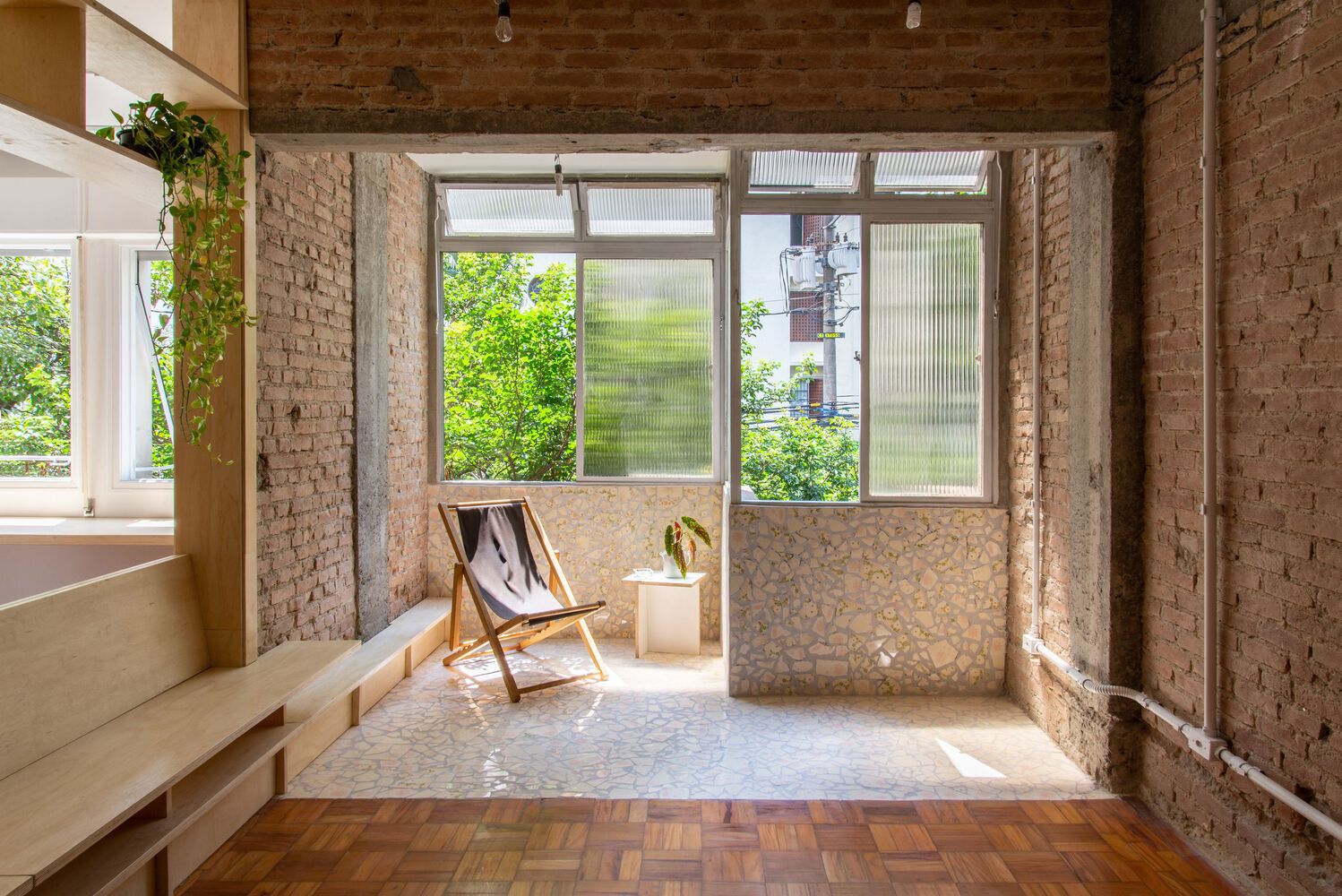
In the field of architecture and construction, the concept of reusing materials is closely linked to the circular economy and reducing the carbon footprint, paving the way for a more sustainable and responsible future. By incorporating practices of recycling, recovery, restoration and/or reuse of demolition materials, efficiency in the use of resources, together with reduced energy consumption, makes it feasible to experiment with techniques, applications and new materials that honor the memory of spaces, while bringing new life to both interiors and exteriors.
Although renovations have become a specialty of the architects of the future, the development of these interventions reveals the creation of spatial dynamics where the reuse of original materials often provides new living conditions. It also opens the door to more sustainable approaches, linked to the future of construction and awareness of environmental care.
Numerous examples of Latin American housing demonstrate how the concept of circular economy underpins these initiatives. The reuse of materials such as ceramics, marble, furniture, wood and others highlights the vast potential of interior design, which dialogues with elements, techniques and textures from other eras. This also promotes the development of everyday practices that contribute to reducing environmental impact.
In this selected collection, we present 5 apartment interior projects in Brazil where the reuse of materials and other architectural elements was part of the project design.
Caco Apartment / Coarquitetos
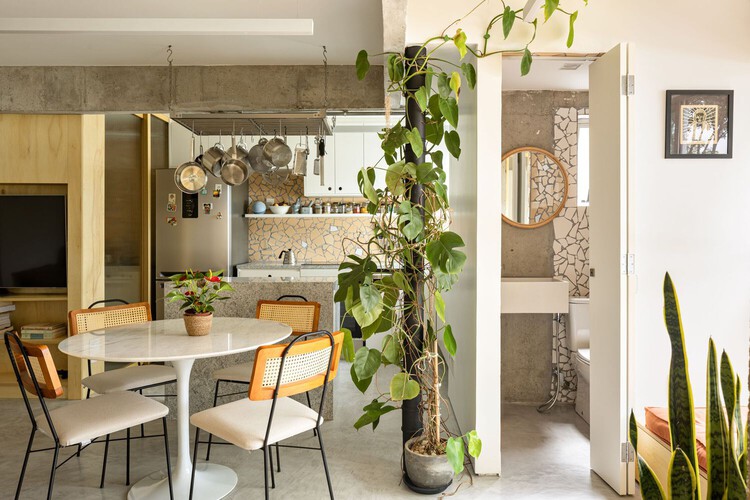
In a radical transformation, the proposal for the Caco Apartment in Brasilia involved demolishing almost all the internal walls and integrating the spaces, with a focus on natural lighting, ventilation and spaciousness. Applying aesthetic and sustainable strategies, the original tiles were reused, transformed into fragments and reused as cladding in the kitchen and bathrooms. This reuse of demolition materials reflects the commitment to sustainability and the appreciation of craftsmanship.
Ibiapinópolis apartment / Ana Sawaia Architecture

Located in a 1973 building in São Paulo, the Ibiapinópolis apartment offers panoramic views of the treetops from the living room windows. The renovation aimed to enlarge the spaces, creating larger, more open areas and integrating the kitchen into the living room. The kitchen posed a significant challenge due to limited natural light and excessive circulation space from the entrances. The solution found was to reuse the national travertine marble from the bathrooms to create a terrazzo floor for the kitchen, service area and toilet. Instead of being discarded, the material was reused in a base reminiscent of pebbles, with pieces cut into triangles of varying sizes incorporated into the design.
RR Apartment / Nati Minas & Studio + Flipê Architecture

Reuse in the renovation of this apartment was not only a necessity, but also a conscious choice, as it incorporated various elements such as marble flooring, built-in cupboards in private areas and some existing furniture. Light colors and handcrafted textures took center stage, revisiting various materials and introducing new finishes to create a fresh atmosphere within a fluid design. As the designers said, the aim was to respect what already existed and renew it to transform the space.
Paradise Apartment / RUÍNA + Elky Santos
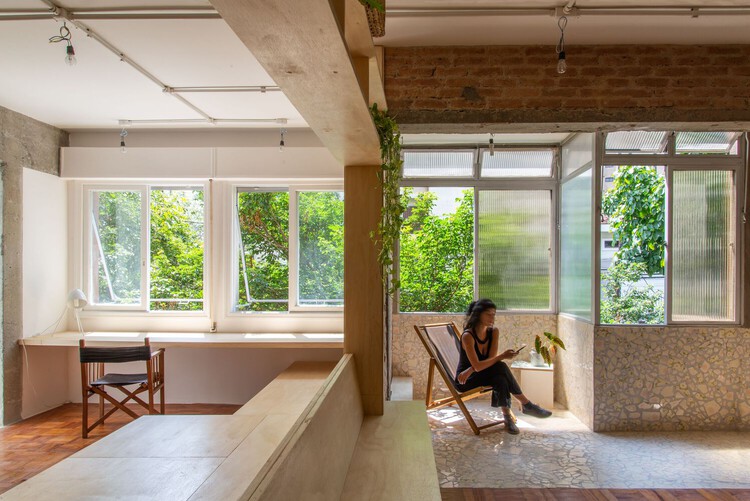
In the Paraíso Apartment, located in the south of São Paulo, the aim was to minimize demolition waste and construction costs. A materials reuse strategy was implemented, involving solid bricks, ceramic floors, cement tiles, glass bricks, irregular mortar, concrete blocks and wooden parquet floors. All the materials available on site were returned to their original function or reused. Using a small to medium-sized crusher, aggregates were created on site for use in subfloors, plaster mortars, plaster finishes, concrete countertops and floors, and ceramic tiles. In addition, the team developed an affordable material for floors and countertops, called "entuhite", made from demolition rubble. Old bathroom tiles were reused as paving and cladding for terrace areas.
Bananeira Apartment / Angá Arquitetura + Pedro Luna Studio
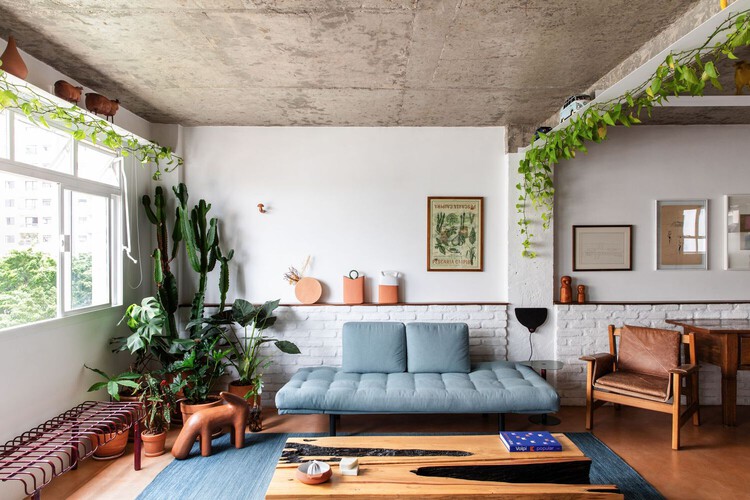
In an old building from the 1970s, the apartment faced the challenge of adjusting its floor plan to meet the needs of the residents while maximizing the use of existing structures. The entrance hall, kitchen and one of the bedrooms were integrated into the living room, creating a spacious and cohesive environment. A green tunnel marks the entrance, and furniture delimits the different spaces, while a brick wall runs through the dining and living areas, serving as a support for various objects. This wall was built with bricks reused from the demolition of a wall in another apartment that was being renovated at the same time. In addition, a wooden shelf made from the apartment's old flooring was installed on the wall, and salvaged bricks were reused to extend the wall of the master bedroom.

